
Core service
Commercial Exhaust Cleaning in Charlotte, NC
Exhaust cleaning for facilities that run more than one kitchen or more than one fan — hotels, campuses, hospitals, food halls and institutional food service — coordinated as a single scope of work.
- Multi-hood and multi-fan facilities
- Shared riser and rooftop coordination
- Staged scheduling for kitchens that stay open
- One document set for the whole facility
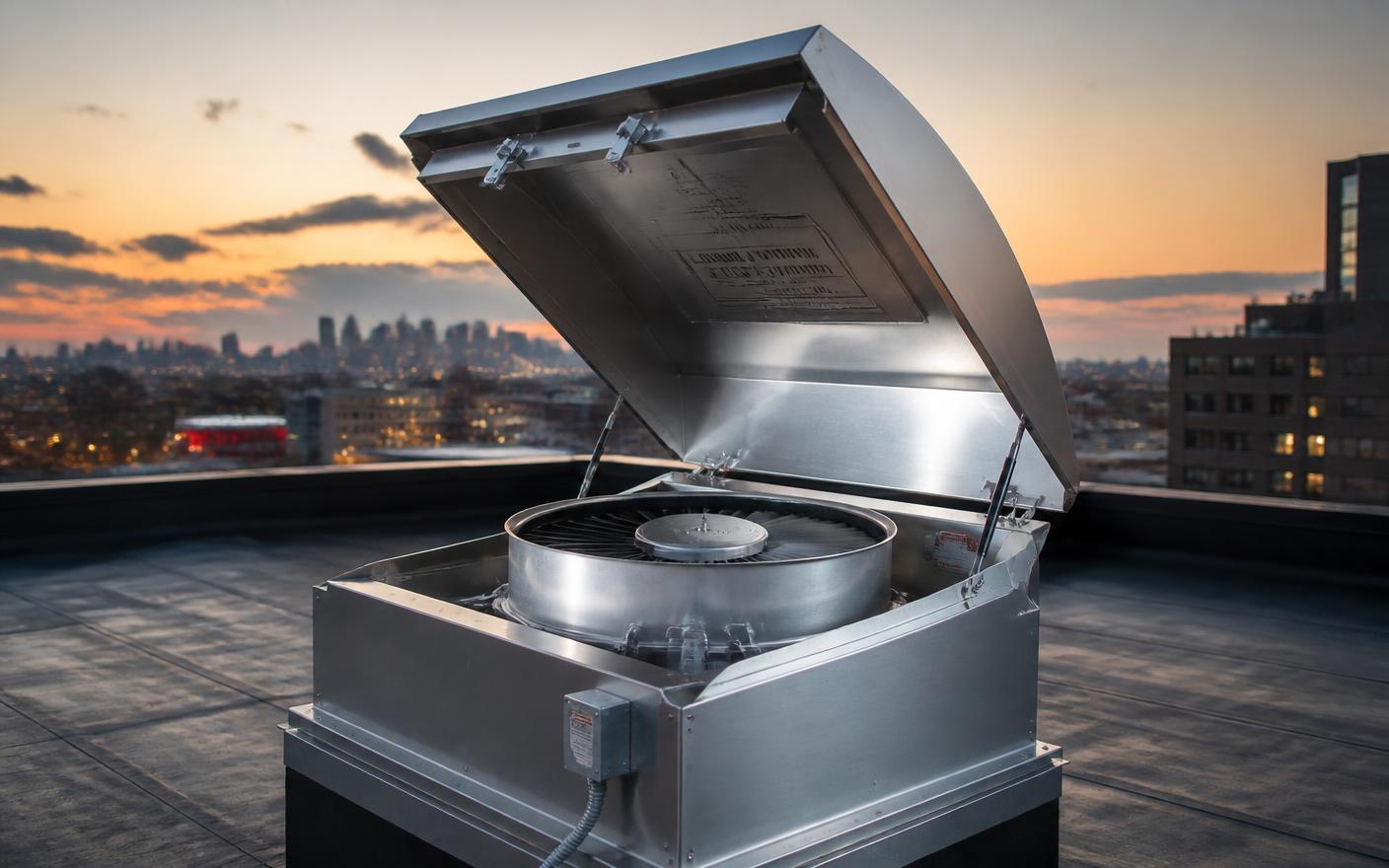
Once a building has more than one cooking line, exhaust cleaning stops being a single job and becomes a coordination problem. A hotel might have a banquet kitchen, a restaurant kitchen and a lobby café tied to different fans. A food hall can have a dozen tenants sharing risers nobody has looked inside. A hospital kitchen cannot simply close. The cleaning work is the same; the planning is what makes it succeed or fail.
Facilities this covers
- Hotel and conference-center kitchens, including banquet and pantry lines
- University, school and corporate dining halls
- Hospital and senior-living food service
- Food halls and multi-tenant kitchens sharing exhaust infrastructure
- Commissary and catering production kitchens
- Grocery and prepared-food departments with hooded cooking
How multi-system work is planned
Inventory first
Every hood, duct run and fan is identified and tied to the kitchen it serves. In older Charlotte buildings, that inventory alone often turns up a fan nobody knew was still connected to a live hood.
Staged scheduling
Where a facility cannot go dark, the work is broken into windows — one line, one wing or one tenant at a time — so production continues and each section still gets a full hood-to-fan cleaning rather than a rushed pass.
Access and coordination
Roof access, keys, elevator use, tenant notice and after-hours building access get confirmed before the crew shows up, because those are the details that turn a four-hour job into a wasted night.
Consolidated documentation
You get one record covering every system: what was cleaned, what could not be reached, and which units need access panels or repair attention. That is the file facilities teams actually need at inspection or renewal time.
Shared risers deserve extra attention
In multi-tenant buildings, a shared vertical riser is the section most likely to be neglected — no single tenant owns it, so no single tenant cleans it. It is also the section where a fire has the clearest path between spaces. If your building has shared exhaust infrastructure, treat the riser as part of the scope from the start. More on that work under exhaust duct cleaning.
Related service paths
Single-kitchen operations are usually better served by kitchen exhaust cleaning or restaurant hood cleaning. Facility-wide pricing follows the same factors described on the cost page, multiplied across systems and adjusted for access.
Frequently asked questions
Can multiple kitchens in one building be serviced together?
Yes, and it is usually the better way to handle a hotel, campus or food hall. One coordinated visit covers shared risers and multiple fans, and gives facilities one document set instead of several vendors reporting separately.
Do you work with facility managers and property teams?
Scheduling, roof access, tenant notification and documentation are normally coordinated through whoever manages the building. Tell us who owns access and the plan gets built around it.
What about kitchens that never fully close?
Institutional kitchens that run long hours can often be sectioned — one hood or one line at a time across scheduled windows — so the facility keeps producing while the system gets cleaned in stages.
Request a commercial hood cleaning quote
Tell us about your kitchen — cooking line, hood count and how the system is used — and we will follow up with scheduling and pricing details.