
Core service
Commercial Kitchen Hood Cleaning in Charlotte, NC
The complete service for a commercial cooking line: hood canopy, plenum, baffle filters, accessible ductwork and the exhaust fan, cleaned in one visit and documented when the work is done.
- Hood, plenum and filters cleaned to accessible bare metal
- Accessible duct runs and exhaust fan included
- Overnight and pre-open scheduling
- Written record of scope and access limitations
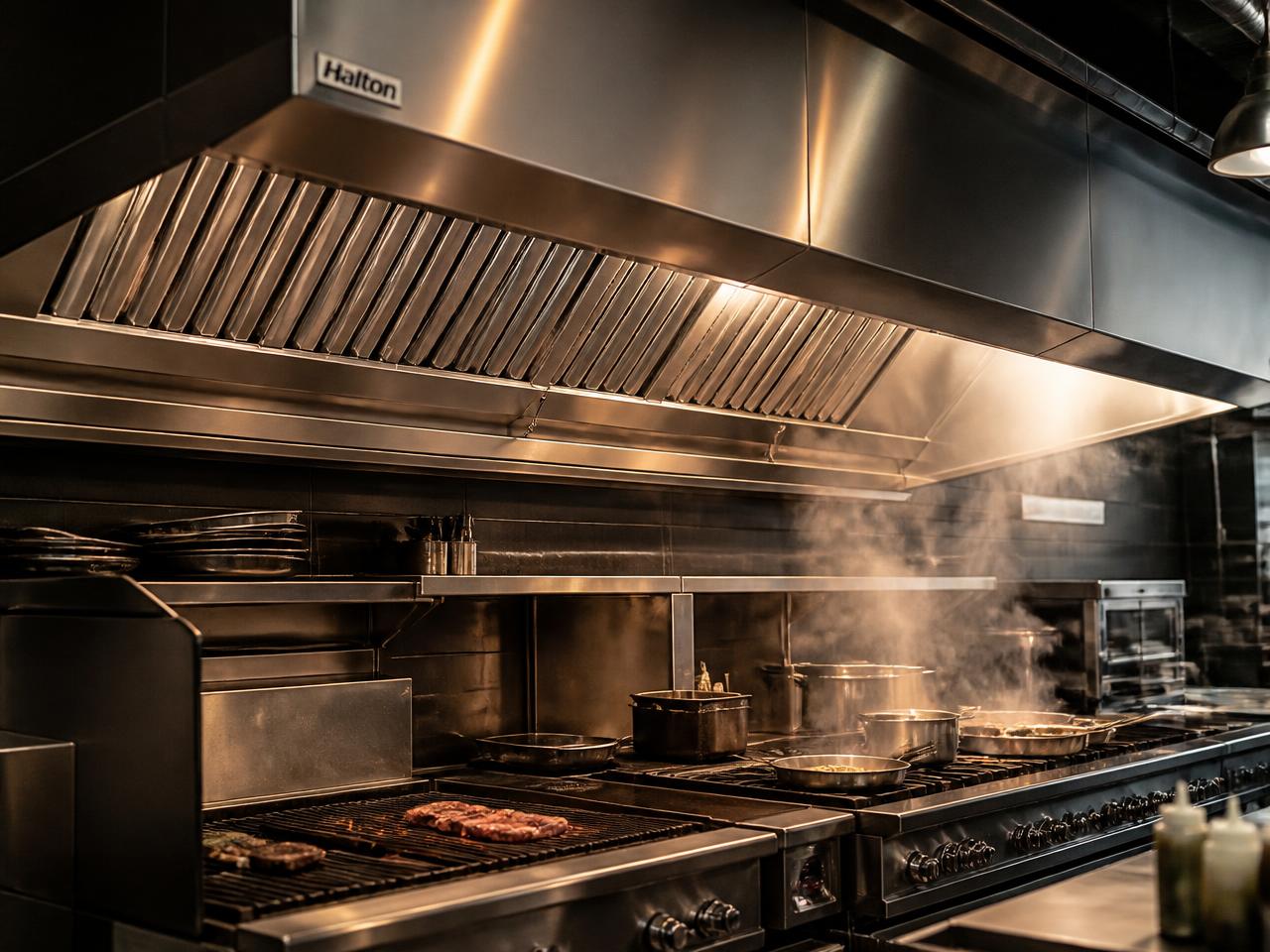
A commercial kitchen hood is the first collection point for everything the cooking line throws off. Vaporized oil, carbon and steam hit the cool stainless surface, condense, and stay there. The filters catch some of it; the plenum behind them catches more; the rest moves into the duct. Cleaning the hood alone is why some kitchens look fine at eye level and still have a loaded system overhead.
This service handles the hood assembly as part of the whole exhaust path. In a Charlotte restaurant running a fry station and a charbroiler, that difference shows up within weeks — the filters get replaced or degreased on a routine, while the plenum and duct transition keep loading unless someone opens them up.
What the service covers
- Hood canopy and interior surfaces — cleaned back to accessible bare metal, including corners and seams where deposits harden.
- Plenum — the chamber behind the filters, typically the heaviest accumulation point in the hood.
- Baffle filters — degreased and inspected. Warped, damaged or mismatched filters get flagged; see hood filter cleaning for how filters are handled between full services.
- Grease troughs and cups — emptied and cleaned so drainage works instead of overflowing onto the cooking surface.
- Duct transition and accessible duct runs — reached through existing access panels. Deeper runs are covered under exhaust duct cleaning.
- Exhaust fan — housing, blades and base, addressed as part of the full system. Details on exhaust fan cleaning.
How a visit runs
Work starts after the line is cold. Cooking equipment, prep surfaces and floors are covered before anything is opened up, because the point is a clean kitchen at the end, not a clean hood and a mess underneath. Filters come out first, the plenum and canopy are cleaned, accessible duct sections are opened through panels, and the fan is cleaned last so nothing loosened above drops onto finished surfaces. Then the kitchen is wiped down and put back the way it was found.
When something needs attention that is outside the cleaning scope — a fan hinge that will not hold, a missing access panel, a filter that no longer seals — you hear about it with the reason, not as a bundled upsell.
Choosing an interval
Interval is driven by cooking type and hours, not calendar habit. A wood-fired kitchen loading a duct in six weeks and a bakery kitchen running ovens do not belong on the same schedule. After the first cleaning there is real evidence of how fast your system loads, and the next interval should be set from that. The hood cleaning frequency guide walks through how to reason about it, and between-service maintenance covers what kitchen staff can do to slow buildup.
What it costs
Pricing follows hood count, accumulation, fan and roof access, and how often the system is serviced. A kitchen on a steady schedule costs less per visit than the same kitchen cleaned once a year, because there is far less to remove. The commercial hood cleaning cost breakdown explains each factor so you can read a quote critically.
Frequently asked questions
What is included in a commercial kitchen hood cleaning?
The hood canopy and interior, the plenum behind the filters, baffle filters, grease troughs and cups, and the transition into the duct. On a full-system service, accessible duct runs and the exhaust fan are cleaned in the same visit.
Does the kitchen have to close?
The cooking line has to be cold and clear, which is why most cleanings happen overnight or before opening. A single-hood kitchen is usually finished inside one closed period.
What happens to areas that cannot be reached?
They get documented. If a duct run has no access panel or a section is sealed behind ceiling material, that is written down along with what it would take to reach it, rather than quietly skipped.
Request a commercial hood cleaning quote
Tell us about your kitchen — cooking line, hood count and how the system is used — and we will follow up with scheduling and pricing details.