
Standards & documentation
NFPA 96 Hood Cleaning in Charlotte, NC
NFPA 96 is the standard your inspector and your insurer are most likely working from. Cleaning to it means the whole grease-bearing path is addressed and the work is documented well enough to prove — not a certificate handed over after a filter wipe-down.
- Complete grease-bearing path addressed
- Dated before-and-after documentation
- Inaccessible sections recorded in writing
- Interval recommended on observed load
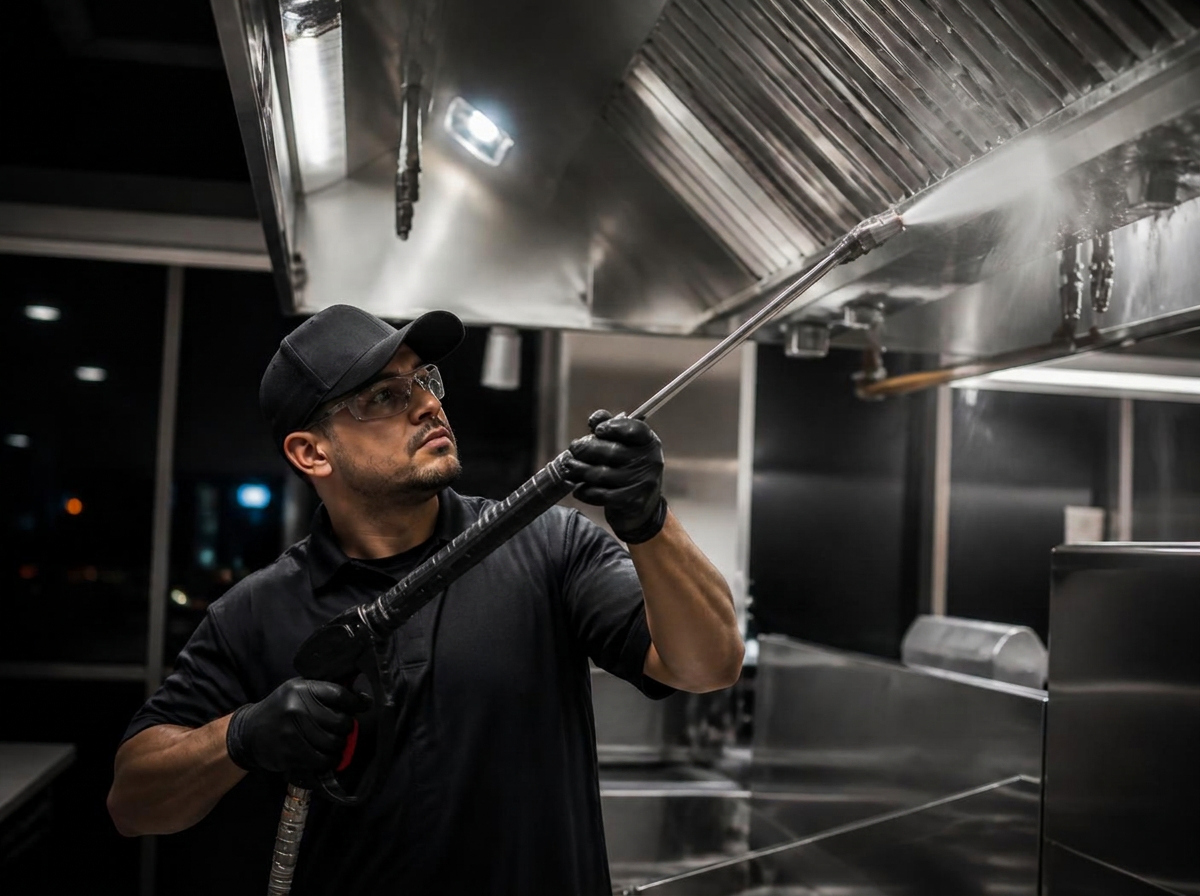
NFPA 96 — the Standard for Ventilation Control and Fire Protection of Commercial Cooking Operations — is published by the National Fire Protection Association. It is widely referenced by fire officials and insurance carriers as the benchmark for how commercial kitchen exhaust systems should be built, operated, inspected and maintained.
It is worth being precise about what a cleaning company can and cannot claim here. A cleaning helps support compliance and helps keep a system inspection-ready. It does not certify a kitchen, and it does not guarantee an inspection result. Cleaning requirements depend on the specific system and cooking operation, and the final word belongs to your local authority having jurisdiction.
What the standard covers
- Construction and installation of hoods, ducts and exhaust fans
- Access openings so the full duct run can actually be inspected and cleaned
- Grease removal devices — the baffle filters over the cooking line
- Fire-suppression systems serving the cooking equipment
- Airflow and make-up air
- Inspection frequency for grease build-up, based on the type of cooking operation
- Cleaning of the entire grease-bearing surface, not selected sections
- Record keeping after inspection and cleaning
How inspection frequency is judged
The standard does not give every kitchen the same number. Frequency scales with the cooking operation: solid-fuel cooking is inspected most often, high-volume operations frequently, moderate-volume operations less often, and low-volume operations such as seasonal or day-camp kitchens least often. The practical test in a working kitchen is measured grease accumulation — if the system is loaded before the next scheduled date, the interval is wrong.
The frequency guide works through how cooking type, hours and equipment change the answer, and recurring hood cleaning is how the right interval gets held once it is established.
Cleaning the whole grease-bearing path
The distinction that matters most for inspection readiness is scope. Grease accumulates along the entire path, so the hood alone is never the job:
- Hood canopy, capture area and baffle filters
- The plenum behind the filters, where grease concentrates out of sight
- Horizontal and vertical duct runs, through access panels
- The exhaust fan, housing, blades and base
- Rooftop grease containment
Access panels are a compliance issue, not an upsell
A duct run without adequate access openings cannot be inspected or cleaned along its length. Older Charlotte buildings — converted mill space in NoDa and South End, long- established downtown kitchens in Gastonia and Rock Hill — are frequently under-panelled. Fitting proper access where the duct allows is what makes every later service both cheaper and genuinely complete.
Documentation and inspection readiness
What belongs in the record after every visit:
- Date of service and the systems covered
- Scope of work performed on each component
- Before-and-after photographs of the hood, duct interior and fan
- A written note of any section that could not be reached, and why
- A recommended next-service interval based on the grease load observed
Keep it on site. The record only helps when it is available at the moment the inspector, the insurance reviewer or a new manager asks for it.
Responsibilities that stay with the operator
- Daily and weekly maintenance between visits — see the maintenance routine
- Keeping filters in place, correctly oriented and undamaged during service
- Scheduling suppression-system inspection with a licensed suppression contractor
- Confirming required frequency with the local authority having jurisdiction
- Holding the cleaning records where they can be produced on request
This page is general guidance about commercial kitchen exhaust cleaning, not legal, code, insurance or fire-safety advice. Confirm requirements for your facility with your inspector and your carrier.
Frequently asked questions
What is NFPA 96?
NFPA 96 is the National Fire Protection Association's Standard for Ventilation Control and Fire Protection of Commercial Cooking Operations. It addresses the design, installation, operation, inspection and maintenance of commercial kitchen exhaust systems, including how often those systems should be inspected for grease build-up.
Does a cleaning make my kitchen NFPA 96 compliant?
No single cleaning makes a kitchen compliant. Compliance covers the whole system — construction, fire suppression, access, airflow and ongoing maintenance — and it is judged by your local authority having jurisdiction. Regular, documented cleaning helps support compliance and keeps the system inspection-ready; it does not guarantee an inspection outcome.
How often does NFPA 96 say a hood should be inspected?
The standard sets inspection frequency by cooking volume and type rather than a single number for everyone — solid-fuel and high-volume operations are inspected far more often than low-volume ones. The correct interval for your kitchen depends on your specific system and cooking operation, and should be confirmed with your inspector and insurer.
What documentation should I keep?
Keep a dated record of each service: which systems were cleaned, the scope of work, the areas that could not be reached and why, and before-and-after photographs. Keep it on site, not only with a head office, so it is available on the day an inspector asks.
What if part of my duct run cannot be reached?
It should be recorded in writing, not omitted. Where the duct allows, access panels can be added so the run can be cleaned properly on later visits. An honest record of inaccessible sections is more useful to an inspector than a blanket certificate.
Request a commercial hood cleaning quote
Tell us about your kitchen — cooking line, hood count and how the system is used — and we will follow up with scheduling and pricing details.