
Pricing
How Much Does Commercial Hood Cleaning Cost in Charlotte?
No universal price exists for this work, and anyone quoting one sight-unseen is guessing. What does exist is a clear set of factors that decide the number — here they are, so you can judge any quote you receive.
- The factors that actually move the price
- How to compare quotes on scope
- Why deferred cleaning costs more
- What should be included as standard
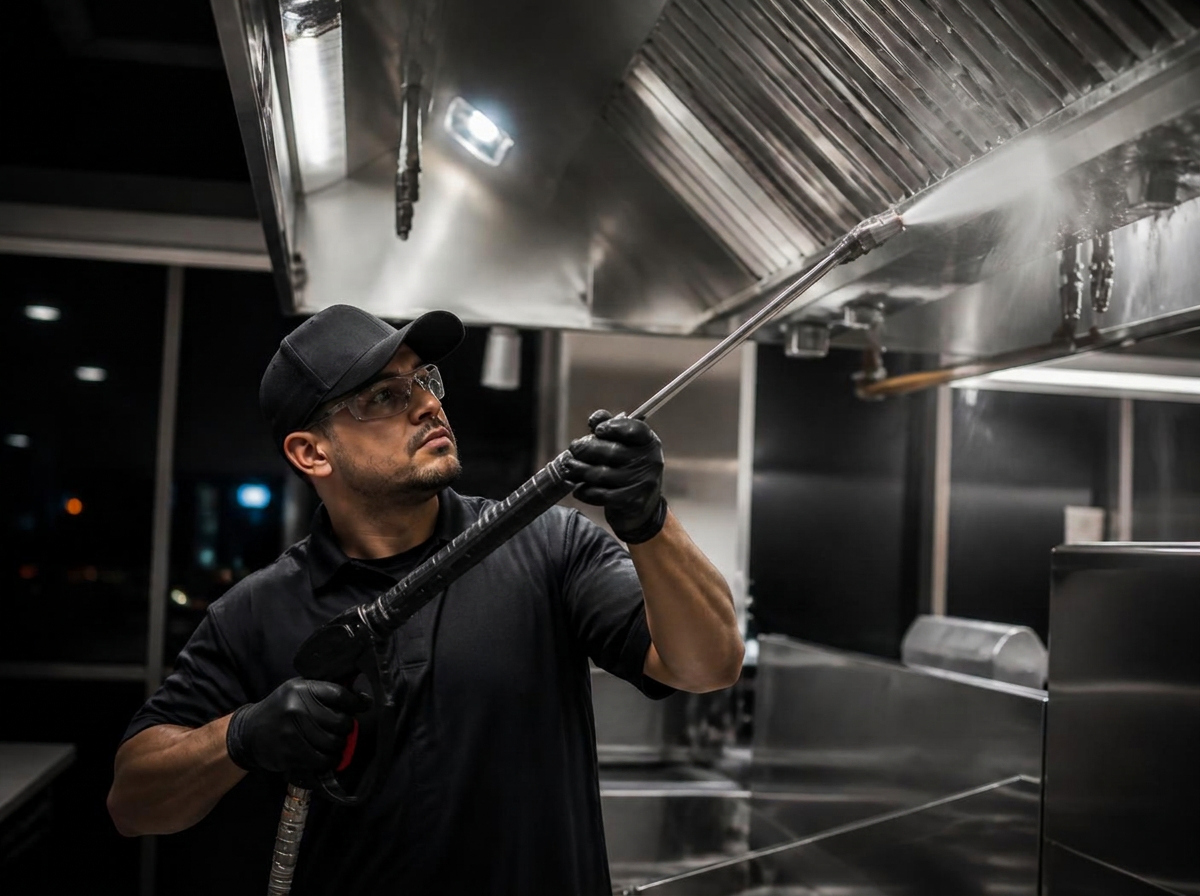
Hood cleaning is priced on labor and difficulty. Every factor below is really a proxy for how many hours the job takes and how hard those hours are. Once you see it that way, the spread between quotes usually explains itself.
What drives the price
1. System size and hood count
A single eight-foot hood over a flat top is a different job from three hoods running the length of a cooking line. Linear footage of hood and the number of separate systems set the baseline.
2. Grease accumulation
This is the factor operators underestimate most. Heavy, hardened deposits take hours of additional labor to remove. A system cleaned quarterly is quick work; the same system after eighteen months can double the time on site.
3. Accessibility
Roof access, ladder or hatch conditions, ceiling height, tight equipment spacing and the number of usable duct access panels all change the effort. A rooftop fan reached by an interior hatch and a short walk is not the same as one behind a locked stair and a parapet.
4. Number of exhaust components
Duct runs, risers and fans each add scope. Facilities with several fans tied to one kitchen — common in hotels and food halls — price accordingly. See commercial exhaust cleaning.
5. Cleaning frequency
Recurring service costs less per visit than one-off calls, because there is less to remove and the crew already knows the system. Frequency itself should be set by cooking type — see the frequency guide.
6. Scope of work
Hood and filters only, hood plus duct, or a complete hood-to-fan cleaning are three different prices. Decide what you are buying before comparing numbers.
7. Facility type and cooking equipment
Solid-fuel, charbroil and high-volume fry lines produce denser deposits that take longer to remove than a bake or steam kitchen of the same size.
8. Scheduling requirements
Overnight, pre-open, weekend and holiday windows carry different labor costs than a daytime visit to a kitchen that is closed anyway.
How to compare two quotes properly
- Line up the scope: hood, plenum, filters, duct sections, fan — which are in writing?
- Ask which duct runs are covered and what happens to sections without access.
- Confirm whether roof work and grease containment are included.
- Confirm kitchen protection and post-work cleanup are included, not extra.
- Confirm you receive written documentation of the completed work.
- Then, and only then, compare the totals.
Deferring cleaning is the expensive option
Postponing service does not avoid cost, it moves it and adds to it: heavier accumulation means longer visits, restricted airflow means a hotter kitchen and harder-working equipment, grease at the fan base means roof damage, and no documentation means an awkward conversation at inspection or renewal. The cheapest schedule over three years is almost always a steady one.
Getting a real number for your kitchen
Send hood count and length, cooking equipment, fan type and location, roof access, last cleaning date and your available window. That is enough to produce a quote you can rely on rather than a range. Request a commercial hood cleaning quote.
Frequently asked questions
Why won't you publish a flat price?
Because a flat price for hood cleaning is a marketing number, not a quote. Two kitchens with identical hood counts can differ by hours of labor depending on accumulation, roof access and how many duct sections can actually be opened. A number published before anyone has seen your system tells you nothing useful.
Is a cheaper quote ever the better deal?
Sometimes — and sometimes it is cheaper because the duct and fan are not in it. Compare scope line by line before comparing price. If one quote covers hood, filters, accessible duct and fan and another covers 'hood cleaning', they are not the same purchase.
Does a recurring schedule reduce cost?
Usually, yes. A system cleaned on a steady interval holds far less grease per visit, so each visit takes less time. The expensive cleanings are the ones that follow a year of nothing.
What should be included in the price?
Protecting the kitchen before work, cleaning the agreed scope, cleaning up afterward, and written documentation of what was done and what could not be reached. If documentation is an add-on, ask why.
Request a commercial hood cleaning quote
Tell us about your kitchen — cooking line, hood count and how the system is used — and we will follow up with scheduling and pricing details.