
Core service
Kitchen Exhaust Cleaning in Charlotte, NC
Cleaning the complete kitchen exhaust system — hood, plenum, filters, accessible ductwork and the exhaust fan — so the grease load is removed from the whole path instead of one visible section.
- Hood-to-fan scope in a single visit
- Duct runs opened through existing access panels
- Rooftop or inline fan included
- Access limitations documented, not skipped
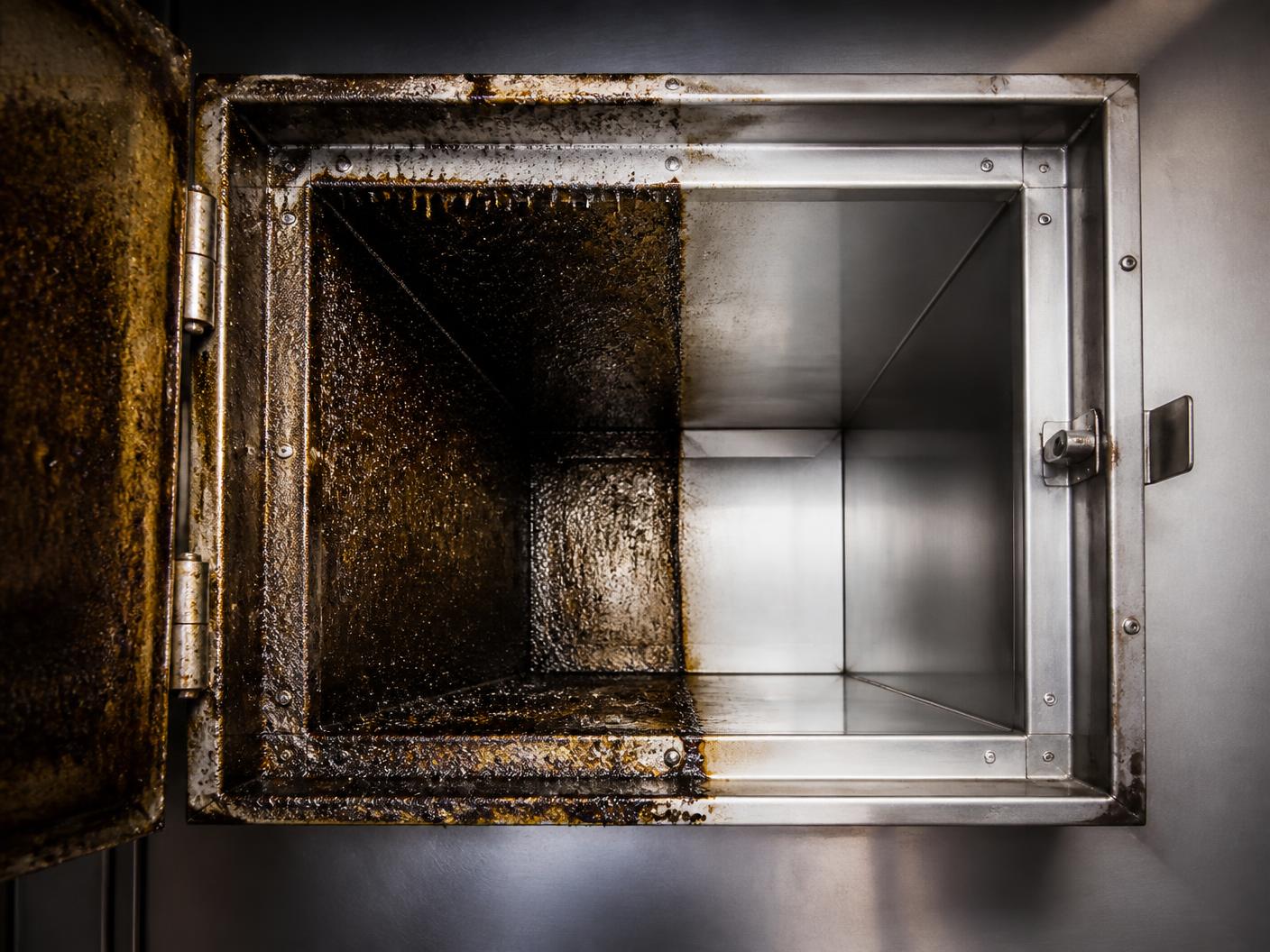
A kitchen exhaust system is one continuous path: cooking vapor enters at the hood, passes the filters, moves through the plenum into the duct, travels the run, and exits through the fan. Grease deposits at every stage. Cleaning one stage and leaving the others is the most common gap in commercial kitchen maintenance, and it is usually invisible from the kitchen floor because the loaded sections are inside the duct and up on the roof.
The full scope, stage by stage
Hood and plenum
Canopy, interior surfaces and the plenum chamber behind the filters. Covered in depth on the commercial kitchen hood cleaning page.
Filters
Baffle filters removed, degreased and inspected. Damaged or ill-fitting filters let grease past the first barrier and straight into the duct — see hood filter cleaning.
Ductwork
Horizontal and vertical runs cleaned through existing access panels. Vertical risers in multi-storey Charlotte buildings are frequently the least-serviced part of a system because they are the hardest to reach. Detail on exhaust duct cleaning.
Exhaust fan
Housing, blades, base and hinge hardware. A grease-loaded fan runs out of balance and moves less air every month. See exhaust fan cleaning.
Signs the system needs attention beyond the hood
- Smoke lingering under the hood during a normal service
- The kitchen running noticeably hotter than it used to
- Grease staining on the roof around the fan curb, or dripping at the fan base
- Filters that load faster than they used to at the same volume
- Increased fan noise or vibration
- No record of a duct or fan cleaning within the last year
Why airflow matters as much as fire safety
A restricted exhaust system does not just carry a fuel load — it stops doing its job. Make-up air balance goes off, heat and smoke stay in the kitchen, doors get harder to open, and comfort in the dining room suffers. Cooks feel it long before anyone measures it. Restoring airflow is often the change kitchen staff notice first after a full cleaning.
Scheduling and cost
Full-system work is scheduled when the line is cold and roof access is available. Cost is driven by run length, number of fans, accumulation and access — the cost breakdown covers each factor. For a plain-language walkthrough of what a complete service looks like, read the kitchen exhaust cleaning guide.
Frequently asked questions
What is the difference between hood cleaning and kitchen exhaust cleaning?
In practice they describe the same job at different depths. Hood cleaning usually refers to the visible canopy, plenum and filters. Kitchen exhaust cleaning means the whole path — hood, ducts and fan. A quote that says 'hood cleaning' but only covers the canopy leaves the duct and fan loaded.
How do you clean duct runs that have no access panels?
Sections without access are inspected as far as they can be reached and then documented. Where a run cannot be cleaned properly, the practical fix is adding access panels, and you get told that instead of being charged for work that did not happen.
Does the roof need to be accessed?
For most systems, yes — the exhaust fan sits on the roof, and it is one of the heaviest grease collection points. Roof access arrangements should be confirmed before the visit, especially in leased or multi-tenant buildings.
Request a commercial hood cleaning quote
Tell us about your kitchen — cooking line, hood count and how the system is used — and we will follow up with scheduling and pricing details.