
Service programs
Recurring Hood Cleaning in Charlotte, NC
One cleaning resets a system. A schedule keeps it from getting back to where it was. Recurring service sets an interval on what your system actually looks like when it is opened — then holds a consistent slot so nobody has to remember to book it.
- Interval set on observed grease load
- Consistent overnight or early-morning slot
- Records kept visit to visit
- Interval reviewed as the menu changes
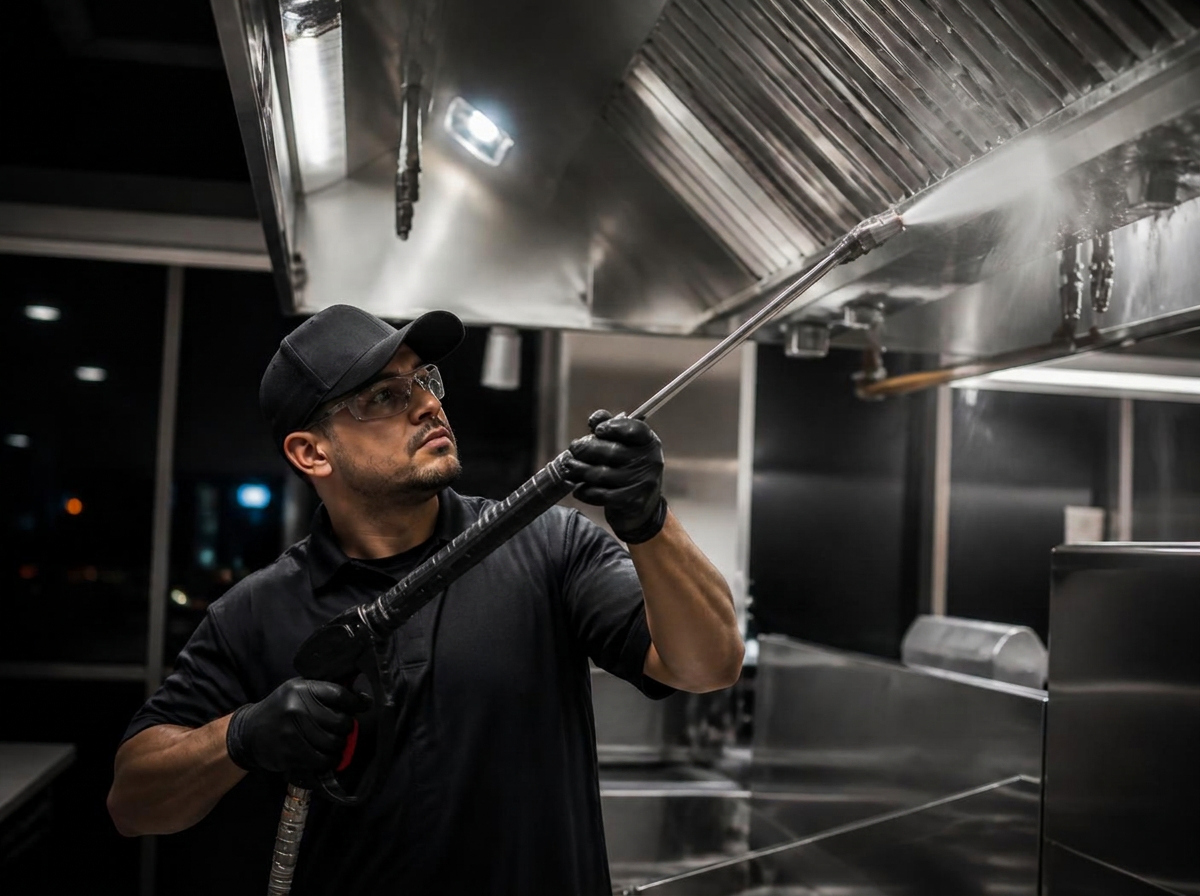
The most common reason a Charlotte kitchen ends up with a badly loaded exhaust system is not neglect. It is that the last cleaning happened when someone noticed the problem rather than on a plan, and the next one was never booked. A recurring program removes the decision.
How the interval gets set
A default annual date is a guess. The interval that holds up is built from three things:
- Cooking type. Solid fuel and char-broiling load fastest, then heavy frying, then griddle and oven work, then steam and low-grease production.
- Hours on the line. A kitchen running fourteen hours a day loads roughly twice as fast as the same equipment running seven.
- What the last visit found. The condition of the plenum, duct and fan at the next service is the honest verdict on whether the interval was right.
The frequency guide works through the starting points in detail, and frequency expectations for your facility should be confirmed against NFPA 96 with your local inspector and insurer.
What a program includes
- A fixed service window agreed in advance — usually the same night of the week
- The complete exhaust path each visit: canopy, filters, plenum, accessible duct and fan
- Dated before-and-after photographs filed against each system
- A written note of anything found — hardware wear, damaged filters, containment
- An interval review after each visit rather than a locked contract date
Multi-site and multi-hood facilities
Facilities with more than one system rarely need them all on one date. A hotel breakfast line, banquet kitchen and leased restaurant load at different speeds; a school district works to break windows. Programs are built per system, then routed together where the dates happen to align. See commercial exhaust cleaning and the industry pages for how this plays out by facility type.
What it protects
- Fire risk stays where it should be — grease removed before it accumulates
- Exhaust volume holds up, so the kitchen stays workable through summer
- Fan bearings and belts last longer without an unbalanced grease-loaded wheel
- Roof membrane stays protected because containment is serviced on schedule
- Records exist continuously, not just after a scramble before an inspection
Between visits, the in-house routine matters. The maintenance guide sets out the daily and weekly tasks that keep load off the system, and filter cleaning is where most of that effort belongs.
Frequently asked questions
How is my interval decided?
By what the system looks like when it is opened. The first visit establishes a baseline; the grease load found at the next one tells you whether the interval is right, too long or unnecessarily short. Cooking type and hours set the starting point, observed accumulation sets the final answer.
Is a recurring program cheaper than one-off visits?
Usually, for a practical reason rather than a discount: a system cleaned on the right interval takes less time and less chemical than one that has been left to load up. Visits also route more efficiently when several kitchens in the same area share a night.
Can I change the interval later?
Yes, and you should if the kitchen changes. Adding a fryer, extending hours or switching to char-broiling all shorten the correct interval. A menu that moves away from frying can lengthen it.
What happens if a scheduled date does not work?
It gets moved. The point of a program is a reliable slot, not a rigid one — but a repeatedly deferred visit defeats the purpose, because the interval is what keeps the load manageable.
Request a commercial hood cleaning quote
Tell us about your kitchen — cooking line, hood count and how the system is used — and we will follow up with scheduling and pricing details.